What 77°F Actually Feels Like to Your Dog (and How to Keep Them Safe This Summer)
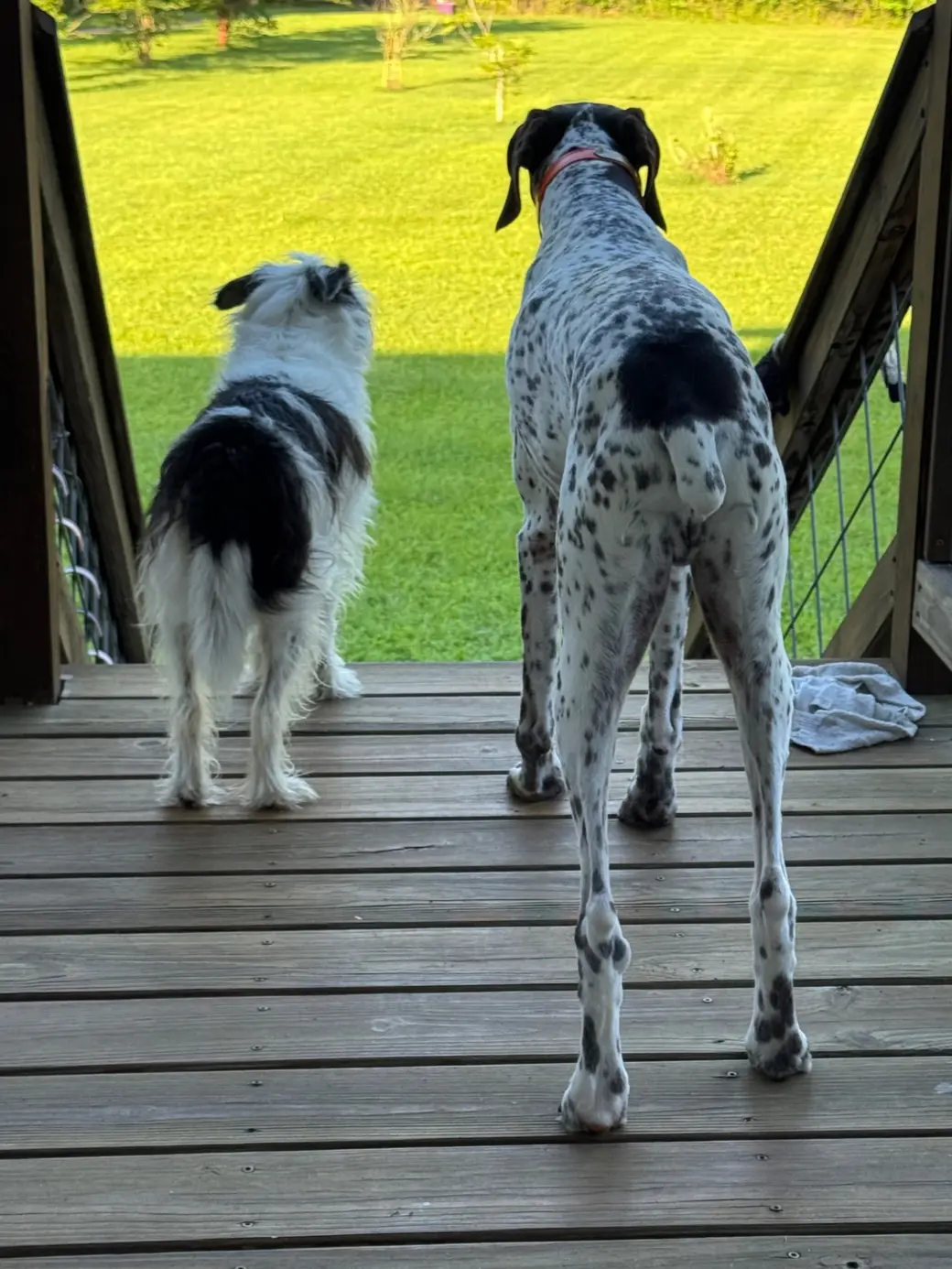
We all know how brutal our summers get down here.
By July, I'm walking my dogs before the sun's really up, because I've learned the hard way that "it's not that hot yet" and "it's safe for paws" are two completely different things. Caring for animals was my whole life before real estate — I studied Animal Science at Auburn and spent years training and caring for exotic animals — and even with all that, our Gulf Coast summers still keep me on my toes.
So this is the stuff I actually do to keep my own dogs safe in the heat, and what I want you to know too. Not to scare anyone — just because a few of these facts genuinely surprised me when I first learned them, and they're easy to act on once you know.
The pavement problem
Here's the one that stops people: the ground your dog is walking on is far hotter than the air.
When the air temperature is 77°F, asphalt in the sun can reach 125°F. When the air hits 86°F, that asphalt climbs to about 135°F — and it keeps going up from there.
Sit with that 77°F number for a second. To us, 77 degrees is a mild day. Pleasant, even. But in Baldwin County, 77°F and up is basically every day from late April through October — which means dangerous pavement is the default condition of our summer, not the exception. And at 125°F, a dog's paw pads can burn in about 60 seconds.
The seven-second test
You don't need a thermometer. You need your hand.
Place the back of your hand flat on the pavement and hold it there. If you can't keep it down for a full seven seconds, it's too hot for your dog's paws. Simple as that. If it's too hot for the back of your hand, it's too hot for them.
When to walk
- Early morning (before 9 a.m.) or after sunset — that's the window.
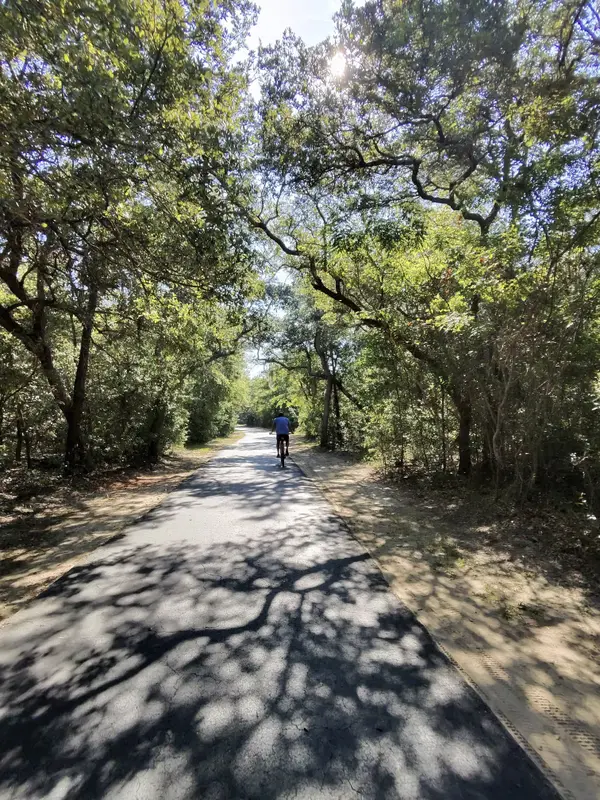
- During the day, stick to grass or shaded paths. Sidewalks, asphalt, and roads hold heat long after the sun starts dropping.
- Remember that pavement stays hot well into the evening. Grass cools off much faster than concrete does.
Heat stroke: know the signs
Dogs don't cool down the way we do. We sweat; they mostly pant — and panting is just a far less efficient cooling system, especially in our Gulf Coast humidity, where the moisture in the air makes panting work even less well. That's why a dog can go from "fine" to "in trouble" faster than you'd expect.
A normal dog's body temperature runs 100.5–102.5°F. Heat stroke begins around 105°F, and 107–109°F is the critical, life-threatening range. Here's what to watch for.
Early warning signs:
- Excessive panting that doesn't slow down, even once they're in shade or AC
- Thick, ropy drool (not their normal thin slobber)
- Bright red gums and tongue
- Restlessness or anxiety
Emergency signs — get to a vet now:
- Stumbling or disorientation
- Vomiting or diarrhea
- Glazed eyes
- Collapse
- Seizures
What to do if you suspect heat stroke
- Move them to shade or air conditioning right away.
- Apply cool — not cold — water to their belly, groin, and paw pads.
- Do NOT use ice or ice packs on the skin. This is the one most people get wrong. Ice constricts blood vessels and actually traps heat inside the body, which is the opposite of what you want.
- Do not use rubbing alcohol.
- Offer small amounts of cool water to drink — don't force it.
- Call your vet or the emergency vet on the way.
- Even if they seem to bounce back, get them checked. Internal organ damage from heat stroke can show up hours later.
The dogs most at risk
Some dogs handle our heat far worse than others. Keep an extra-close eye on:
- Flat-faced (brachycephalic) breeds — bulldogs, pugs, boxers, Shih Tzus, Boston terriers. Their shortened airways make panting much less effective.
- Overweight dogs
- Senior dogs and puppies
- Dark-coated dogs — they absorb more heat
- Thick or double-coated breeds — huskies, malamutes, golden retrievers, German shepherds
- Dogs with heart or respiratory conditions
If your dog is on this list, be the one who calls it early and heads home before they're struggling.
A parked car is never safe — and I mean never
I want to be really clear about this one, because the common version of this warning isn't strong enough.
You'll hear "don't leave your dog in a hot car." True — on an 80°F day, the inside of a car can hit 120°F within minutes, cracking the windows does almost nothing, and 15 minutes can be fatal. But here's what I want you to take away: a closed, parked car is never a safe place for a dog. Not on a hot day, not on a mild day, not for "just a minute." Even a 60°F day with the windows up and the sun out can turn a car into something dangerous.
So the rule in my house is simple: if my dog can't come inside with me wherever I'm going, they stay home. No exceptions, no temperature where it suddenly becomes fine. Home is always the safer choice.
Emergency vet numbers — save these now
Put these in your phone before you ever need them. When something's wrong with your dog in the heat, you don't want to be searching.
VERC Pensacola — (850) 477-3914 4800 N Davis Hwy, Pensacola, FL. Open 24/7, every day — Pensacola's only true 24-hour emergency animal hospital.
MedVet Mobile — (251) 706-0890 2573 Government Blvd, Mobile, AL. Open 24/7 on weekends only. On weekdays, they're open weeknights only (the ER is closed 8 a.m.–6 p.m. Monday through Friday), so for a daytime weekday emergency, head to VERC.
ASPCA Animal Poison Control — (888) 426-4435 Available 24/7. A consultation fee may apply, though it's waived for HomeAgain microchip members.
One more resource while you're here
If keeping your dog safe this summer is on your mind, there's a companion piece you might've missed. Earlier this spring I put together a free guide to Gulf Coast plants that are toxic to dogs — it covers the four most dangerous ones in our area, the symptoms to watch for, and what to plant instead. It lives right here on the blog, and it pairs naturally with everything above. Between the two, you'll have most of the warm-weather hazards covered.
Keep them cool out there
None of this is meant to make you nervous about summer. It's just the handful of things that, once you know them, make it easy to keep your dog safe through the hottest months — early walks, the seven-second test, knowing the signs, and never the car.
If this was useful, send it to a fellow dog parent. We all want the same thing: more good summers with the ones who follow us from room to room.
Before real estate, I spent years training and caring for exotic animals. Keeping living things safe isn't just what I do — it's who I am.
Katie Ragland Real Broker, LLC
Associate Broker, Alabama | REALTOR®, Florida
256-366-6974 | katieraglandrealtor@gmail.com
linktr.ee/katieraglandrealtor
Categories
Recent Posts