When and Where to See the Cahaba Lilies in Alabama (2026 Guide)
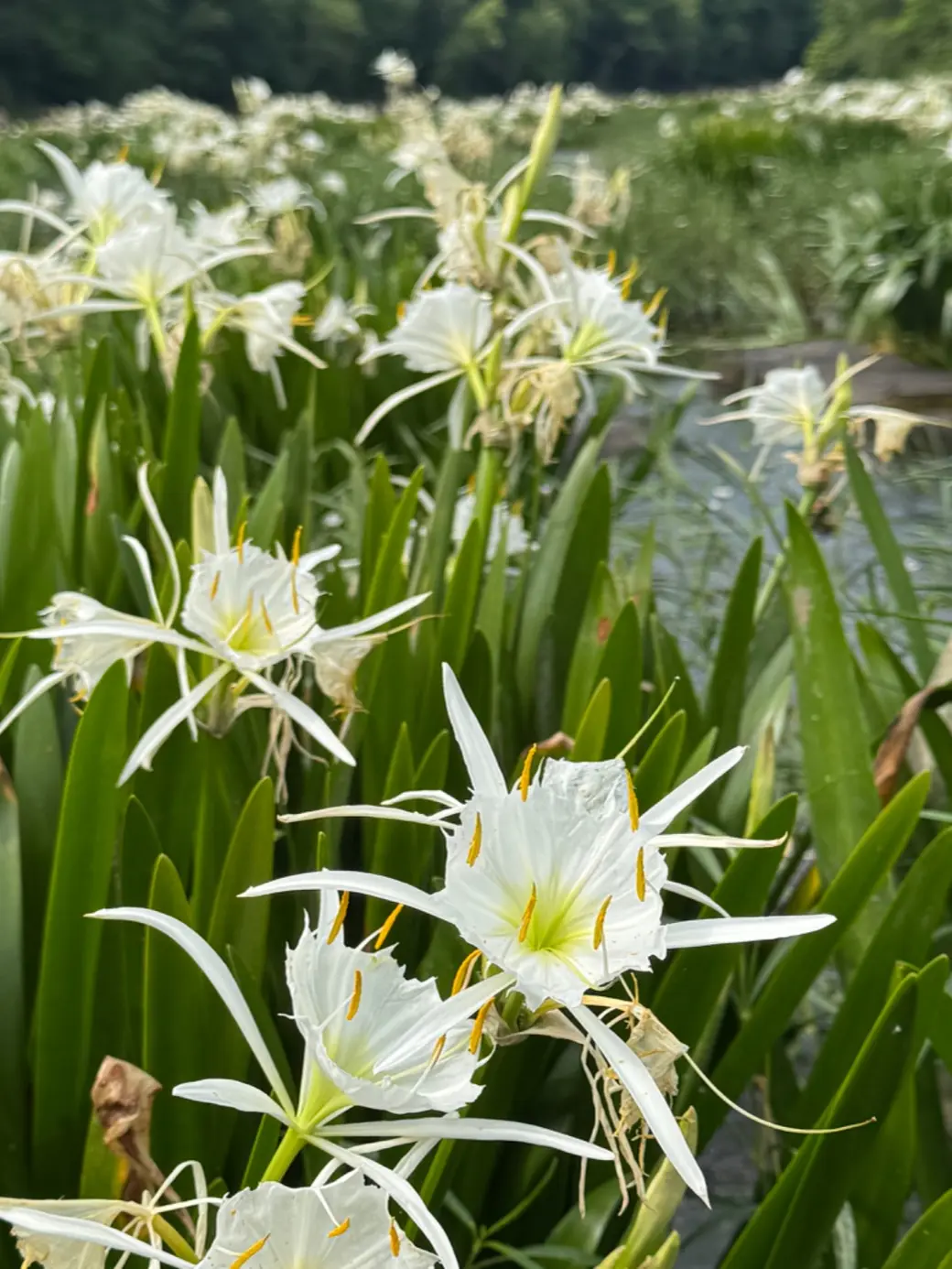
Each spring, on a stretch of river in central Alabama, the rarest wildflower in the state opens its first blooms of the season. They're called Cahaba lilies — and outside of Alabama, Georgia, and a few rivers in South Carolina, they grow nowhere else on Earth.
If you live in Alabama and you've never seen them, this guide walks through what they are, why they matter, when the bloom window opens and closes, and how to get to the best viewing spot from anywhere in the state — including a five-hour drive from the Gulf Coast.
What is a Cahaba Lily?
The Cahaba lily — Hymenocallis coronaria — is an aquatic perennial in the amaryllis family, related to the spider lilies you might recognize from Southern gardens. What sets it apart is how specifically it lives.
The plant only grows where three conditions overlap: fast-moving water, full direct sun, and rocky shoals where the bulbs can wedge themselves into cracks between stones. That combination exists in very few places. Outside Alabama, you'll only find Cahaba lilies in parts of Georgia and a handful of South Carolina rivers. Researchers estimate only about fifty distinct populations remain in the world.
Each individual bloom lasts twenty-four hours. The flower opens overnight, usually in the early evening, and by the next afternoon it begins to wilt. Before it does, it drops its seeds back into the river. The seeds lodge in rock crevices, wait through winter, and start the cycle again the following spring.
Because the habitat is so narrow, the species is vulnerable. Dams, sediment pollution, and bulb poaching have wiped out historical populations. The Cahaba lily is currently under consideration for protection under the federal Endangered Species Act.
When Do Cahaba Lilies Bloom?
The traditional shorthand: Mother's Day to Father's Day. In practice, the bloom window runs from roughly mid-May through mid-June, with peak bloom usually in the last two weeks of May.
The earlier you visit in the window, the more blooms you'll see at once. By the final week of the window, the stands thin out as individual plants finish their cycle.
Time of day matters too. Because each flower opens overnight, the freshest blooms are visible from sunrise through early afternoon. By late afternoon, the day's blooms begin to wilt and the next day's haven't opened yet.
Where to See Cahaba Lilies — The Cahaba River National Wildlife Refuge
The largest viewable population of Cahaba lilies in the world is on a stretch of the Cahaba River inside the Cahaba River National Wildlife Refuge. The refuge sits in Bibb County, about six miles east of West Blocton.
The U.S. Fish and Wildlife Service established the refuge in 2002 to protect this habitat, and it covers roughly thirty-five hundred acres. There's no fee to enter. There's no visitor center building, but kiosks at the main access points provide information. Restrooms are limited — plan accordingly.
Important regulatory note: drones are prohibited on the refuge under federal law (50 CFR 27.34). If you want aerial footage, you'll need to either work with a refuge-approved permit holder or shoot from adjacent non-refuge land.
How to Get There from the Gulf Coast
From Baldwin County, Mobile, or Pensacola, expect about a five-hour drive each way. It's a long day trip but a comfortable weekend if you drive up Friday evening, spend Saturday on the river, and head back Sunday.
Route from the coast:
- Take I-65 north out of Mobile or Loxley through Montgomery.
- Before reaching Birmingham, connect to I-59 south.
- Exit at Highway 5, the West Blocton and Centreville exit (exit 97).
- Highway 5 becomes a two-lane road within about three miles — watch for the turn south.
- Travel roughly eight miles south on Highway 5 to a blinking yellow light.
- Turn left onto County Road 24 into West Blocton, then continue about five miles past town to the refuge.
Cell service is spotty in this part of Bibb County. Download offline maps before leaving the coast.
What to Bring and What to Expect
Water shoes are not optional. Getting close to the lilies means wading into shallow shoals, and the river bottom is rocky with snails and other small creatures on the stones. Closed-toe water shoes or sturdy sandals make the difference between a comfortable afternoon and bruised feet.
Beyond shoes, bring:
- Plenty of water — no concessions anywhere nearby.
- Sun protection: hat, sunscreen, sunglasses. The shoals offer no shade.
- Bug spray for the bank areas.
- Camera or phone — the macro shots reward patience.
- Trash bag — pack out anything you bring in.
What not to do: don't pick the lilies, don't dig up bulbs, don't trample the shoals. The Cahaba lily is one ecosystem disturbance away from federal protection. Your job as a visitor is to look, photograph, and leave.
Guided Trips and Kayak Rentals
If you want to kayak through the lily stretch rather than wade from the bank, you can either bring your own kayak or work with a local outfitter. Guided trips run by the Cahaba River Society and a couple of local outfitters are worth it on a first visit — guides know where the largest stands are and where it's safe to wade.
Check current river gauge readings before kayaking. The USGS station at Cahaba River near West Blocton is the relevant gauge, and recent rainfall significantly changes paddling conditions.
Why the Cahaba River Itself Matters
The lily isn't the only reason this river is special. The Cahaba is Alabama's longest free-flowing river — meaning no major dams along most of its length, which is unusual for a Southern river of this size. That single fact is why so much of what lives here still lives here.
Mile for mile, the Cahaba is the most biodiverse river in North America. The U.S. Fish and Wildlife Service has documented one hundred thirty-one fish species in this river system, eighteen of them endemic — meaning they exist in the Cahaba and the broader Mobile River Basin and nowhere else on Earth.
Seeing the lilies and not noticing the rest of the river is a missed opportunity. Look for the small fish in the shallows. Listen for the birds in the bank trees. Notice how the water sounds different over the shoals than over the deeper pools. The lily is the gateway. The river is the gift.
Plan Your Visit Before the Window Closes
The bloom window is short by design. The same conditions that make Cahaba lilies rare — the narrow habitat, the twenty-four-hour bloom cycle, the dependence on a free-flowing river — also make the viewing window narrow. Mid-May to mid-June is the year. After that, you wait.
If you're reading this in late May or early June, you're still inside the window. Pick a Saturday. Make the drive. Bring the water shoes. Bring someone you'd want to share the river with.
Some things only show up when you make the effort to be there.
Katie Ragland | Real Broker, LLC | Alabama & Florida
linktr.ee/katieraglandrealtor · 256-366-6974
Categories
Recent Posts