A Baldwin County Dog Owner's Guide to the Toxic Plants in Your Own Backyard
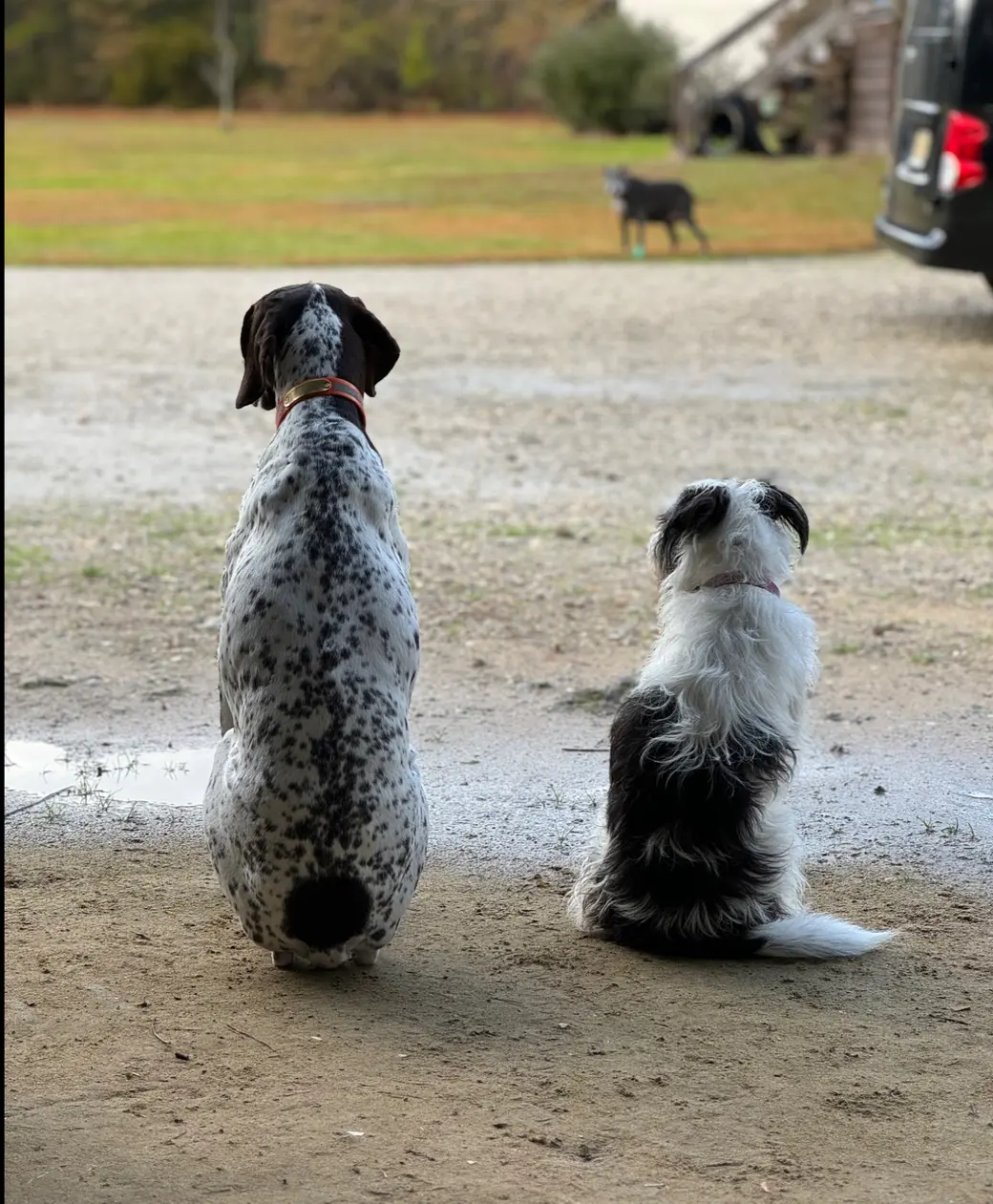
Years ago, one of my dogs spent a long, terrifying night at the emergency vet.
She hadn't eaten anything in our yard. My vet and I were pretty sure it was cross-contamination from a neighbor's lawn treatment that drifted onto ours — the kind of thing you don't even think about until you're sitting in a fluorescent-lit waiting room at 2 a.m. praying your dog comes home with you. And she didn't until the next morning. She had to be kept overnight for observation.
That same dog, years later, had a habit of eating wild mushrooms and then throwing them up an hour later in the worst possible places. Have you ever tried to pick up every single tiny mushroom you can find in a 2 acre piece of property? It’s exhausting. I started doing this regularly after she mixed some rabbit droppings in with her mushrooms one night and threw them both up on our back deck…where the rabbit droppings proceeded to get wedged between the boards. That’s the kind of thing you learn from the first time. She was my favorite never-ending project and I miss her every day.
I'm telling you this because I want you to understand something before we go any further: the most dangerous plants for your dog are probably already in your yard, or in a yard within fifty feet of where your dog walks every morning. And most Gulf Coast pet parents have no idea.
[Download the Free Gulf Coast Pet Parent's Guide to Toxic Plants →] No email required. Just a free PDF you can save to your phone or print for the fridge.
Why I'm Writing This in April
Spring planting season on the Gulf Coast is in full swing. Garden centers in Baldwin County and Pensacola are stocked with the plants that will be in our yards — and our neighbors' yards — for the next decade. Some of those plants are stunning. Some of them are dangerous to dogs in ways that most people don't know about until something bad happens.
This isn't a guide meant to make you anxious. It's a guide meant to make you informed, so you can keep loving the Gulf Coast without losing sleep over what your dog might find on her next walk.
There are dozens of plants that can hurt a dog. Most of them cause mild stomach upset and a sleepless night. Four of them, though, can kill. Those are the four I want you to know by sight, by name, and by what to do if you ever suspect your dog has gotten into one.
The Four Plants Every Gulf Coast Dog Owner Needs to Know
1. Sago Palm (Cycas revoluta)
If you only remember one plant from this entire post, make it this one!
The sago palm is everywhere on the Gulf Coast. Entryways, pool surrounds, landscape beds, container plantings outside restaurants and offices. It's also sold as a houseplant. It looks like a small, tidy palm tree — short trunk, stiff feather-like fronds — and it shows up in landscape designs from Daphne to Pensacola because it thrives in our climate and looks beautiful year-round.
It's also one of the most toxic ornamental plants in the country.
Every part of a sago palm is poisonous to dogs. The seeds — the orange, golf-ball-sized things that drop from female plants — are the deadliest part. One or two seeds can kill a dog. The toxin (cycasin) attacks the liver, and even with aggressive emergency treatment, the mortality rate is around fifty percent.
What to watch for:
- Vomiting (sometimes bloody)
- Diarrhea
- Drooling
- Lethargy or sudden weakness
- Loss of appetite
- Within a day or two, signs of liver failure: jaundice, dark or tar-like stool, abdominal pain
- Neurological signs like tremors or seizures, sometimes within hours
If you suspect your dog has chewed on any part of a sago palm — even a single fallen seed — go to the emergency vet immediately. Don't wait to see if symptoms develop. Hours matter.
One more thing: the cardboard palm (Zamia furfuracea) is in the same family and carries the exact same risks. If you have either plant in your yard and you have a dog, it's worth it to consider replacing it with something else. There are dozens of beautiful Gulf Coast plants that aren't trying to kill your pet.
2. Oleander (Nerium oleander)
Oleander is another one you'll see all over the Gulf Coast — large flowering shrubs with clusters of pink, white, or red blooms, often planted along fences, driveways, and roadside medians. It's a workhorse landscape plant down here because it tolerates heat, salt air, and sandy soil.
It's also toxic from root to flower. Even the water that cut oleander flowers sit in becomes poisonous.
Oleander contains cardiac glycosides, which are compounds that affect the heart. A single leaf can be fatal to a dog. That's not an exaggeration.
Signs of oleander poisoning:
- Drooling, vomiting, diarrhea
- Slow or irregular heartbeat
- Tremors
- Weakness or collapse
This is another one where you don't wait. If your dog has been near oleander and is acting off — even a little off — get to an emergency vet immediately.
3. Azalea (Rhododendron species)
Azaleas are in nearly every Baldwin County yard. They're one of the defining shrubs of spring on the Gulf Coast — those clouds of pink, white, red, and purple blooms that show up in March and April and make Fairhope look like a postcard.
They're also toxic to dogs. All parts of the plant, including the leaves, contain compounds called grayanotoxins that affect the heart and nervous system.
The good news: azalea poisoning isn't usually as immediately fatal as sago palm or oleander, and most dogs recover with prompt treatment. The bad news: severe cases can lead to coma, and you don't want to find out where your dog falls on that spectrum by waiting it out.
What to watch for:
- Vomiting and drooling
- Weakness
- Loss of appetite
- Abnormal heart rhythm
- Tremors
If you think your dog has eaten any part of an azalea, call animal poison control right away and head to your vet.
4. Lantana (Lantana camara)
Lantana is the cheerful little flowering shrub you see in borders, containers, and butterfly gardens — small clusters of yellow, orange, pink, or red blooms that bring in pollinators all summer. It's everywhere down here because it loves the heat and the humidity, and it's hard to kill.
For dogs, the danger is the berries. The unripe green ones especially. Lantana contains compounds that cause liver damage, and the tricky part is that the symptoms can be slow to show up. By the time you notice something is wrong, the damage may already be underway.
Signs to watch for:
- Vomiting and diarrhea
- Weakness
- Jaundice (yellowing of the gums or whites of the eyes)
- Labored breathing
If you have lantana in your yard and your dog is the kind who eats things she finds on the ground, this one is worth being careful about.
Eight More Plants to Know About
The four plants above are the most notably dangerous that are found in abundance locally, but there are others worth being aware of. I put together a full printable guide that covers eight more plants commonly found in Gulf Coast yards — including cardboard palm, caladium and elephant ears, castor bean, brunfelsia (the yesterday-today-tomorrow plant), hydrangea, foxglove, lily of the valley, and most bulb flowers.
Some are mildly toxic. Some are very dangerous. All of them are worth knowing about if you have a dog and a yard.
[Download the Free Gulf Coast Pet Parent's Guide to Toxic Plants →] Print it. Save it to your phone. Share it with your dog-loving neighbors.
Emergency Resources — Save These Numbers Now
If your dog has eaten something you think is toxic, you need two things immediately: a poison control line and a vet you can get to fast. Save these to your phone before you need them.
ASPCA Animal Poison Control 📞 (888) 426-4435 Available 24/7. A consultation fee may apply. *Pro tip: if you have an annual membership through HomeAgain, the fee is waived.
Pet Poison Helpline 📞 (855) 764-7661 Available 24/7. A second option if ASPCA lines are busy.
Veterinary Emergency Referral Center (VERC) — Pensacola 📞 (850) 477-3914 4800 N Davis Hwy, Pensacola, FL Open 24 hours a day, every day of the year.
MedVet Mobile 📞 (251) 706-0890 2573 Government Blvd, Mobile, AL Important hours note: MedVet is 24/7 on weekends only. On weekdays (Monday through Friday), the ER is closed from 8 a.m. to 6 p.m. — they're open weeknights and weekend hours, but not all day during the week.
What to Do If You Think Your Dog Has Been Poisoned
- Stay calm and act fast. Panic costs time and clarity.
- Call animal poison control first. They will tell you whether you need to head to the ER immediately or whether you can monitor at home. Have a guess at how much your dog ingested, when it happened, and your dog's approximate weight.
- Bring a sample of the plant if you can (and take a photo). A leaf, a flower, a piece of stem — anything that helps the vet identify exactly what your dog may have eaten.
- Do NOT induce vomiting without veterinary direction. Vomiting carries the risk of aspiration and if that happens, now you have two emergencies.
- Get to an emergency vet immediately if poison control directs you to. Don't wait for symptoms to "get worse" before deciding. With the most dangerous plants on this list, every minute matters.
One Last Thing
Here's the thing about Gulf Coast life with a dog. The yards are beautiful. The plants thrive. And most of us never stop to think about which of those gorgeous, easy-to-grow shrubs are quietly dangerous to the four-legged family member sniffing her way around the bushes every morning.
You don't have to rip out every plant in your landscape. You just have to know what's there, know what to watch for, and know who to call if something happens. That's the whole point of this guide.
If you found this useful, send it to a Gulf Coast dog owner who'd want to know. That's the best thing you can do with it.
→ [Download the Free Gulf Coast Pet Parent's Guide to Toxic Plants]
Before real estate, I had two careers caring for living things — training exotic animals and working as a licensed massage therapist for over a decade. Caring for people and animals has always been in my DNA. When you're ready for a Realtor® who treats your home and your family — including the four-legged ones — like they matter, I'd love to be your person.
Katie Ragland | Real Broker, LLC 📞 256-366-6974 ✉️ katieraglandrealtor@gmail.com 🔗 linktr.ee/katieraglandrealtor
Categories
Recent Posts