Foley AL Made America's Fastest-Growing List: What's Being Built and Why Elberta Is the Spillover
If you've been Googling Foley, Alabama lately, you've probably seen the headlines. Foley landed on the U-Haul Growth Index as one of America's 15 fastest-growing cities — first in Alabama and 16th nationwide. NOLA and The Advocate ran a major feature. Local, regional, and national real estate publications picked it up.
What the headlines don't always cover is the part that matters if you actually live here, want to live here, or own property in the area. The data is real. The projects supporting that growth are already in motion. And the town next door — Elberta, where I live — is getting the spillover for reasons that have very little to do with Foley itself.
Here's what's actually happening.
The Numbers Behind the Headlines
The U-Haul Growth Index tracks one-way moving truck and trailer rentals across the country, then ranks cities by net arrivals. Foley placed 16th nationwide and first in Alabama. Auburn came in 12th. Huntsville came in 14th. No other Alabama cities cracked the Top 25.
Translated into population: Foley had roughly 20,335 residents in the 2020 census. The current count is around 31,400. That's an increase of more than 11,000 people in about five years — a 51% jump from the official census figure, with annual growth running near 12%.
Median family income climbed from $43,000 in 2020 to over $66,000 last year. Both numbers are significantly above what most cities of similar size manage in any direction.
U-Haul's regional data adds another angle: 53% of moving traffic into Foley represented arrivals, with arrivals up 5% year-over-year and departures down 2%. Chad Rome, U-Haul's regional president for southern Alabama, attributed the trend to affordability, lifestyle, and proximity to the beach. Foley, in his words, has become a place people stop and come to on its own — not just a town drivers pass through on the way to Gulf Shores.
What's Actually Being Built in Foley Right Now
Growth this fast doesn't happen without supporting development. Four major projects are currently moving through Foley's planning commission or already approved by the city council.
- The Waters at OWA. OWA Parks & Resort is seeking subdivision approval for 150 acres north of North OWA Boulevard, west of the Foley Beach Express. This is the first multi-family residential development at OWA. Until now, the complex has been entertainment-anchored — an indoor water park, an amusement park, a downtown district with shops and restaurants, an RV park, and the OWA theater. Adding apartments fundamentally changes what kind of place OWA becomes. Filed in March 2026.
- Live Oak Village expansion. The Foley Planning Commission is reviewing preliminary approval for three phases of Live Oak Village — 101 new single-family homes across phases 4, 5, and 7. The subdivision is south of Underwood Road, west of North Cedar Street. The western boundary borders the Foley Municipal Airport. Filed in April 2026.
- South Juniper Street turn lanes. Approved by the Foley City Council on April 6, 2026, this project adds a new southbound left-turn lane onto Beignet Drive, plus a center median island for landscaping. Located between East Lawson Avenue and Beignet Drive, the work is funded entirely by impact fees from new home development — meaning growth itself is paying for the infrastructure to support it. The city is now seeking contractors through public bidding.
- Margaritaville Wharf Landing — neighbor effect. Just east of Foley in Orange Beach, the $350 million Margaritaville resort across from The Wharf just filed for 142 new residential lots in April. The 80+ acre project is already under construction with a condo complex and bungalows. When complete by end of 2027, it will include around 300 units, seven restaurants, a 7-acre amenity deck, and a 43-slip marina. Its proximity to Foley means the resort's draw and traffic patterns will shape Foley's housing market alongside Orange Beach's.
Together, these four projects represent residential growth, transportation infrastructure, entertainment expansion, and high-end resort development — all advancing simultaneously.
Why Elberta Got the Spillover
The most interesting line in NOLA's recent feature on Foley wasn't about Foley at all. It was buried about two-thirds of the way down. The piece said: "Foley's growth is so significant that some new residents who want properties with more open space are even turning to neighboring Elberta, a small town that just got a new wine bar and coffee shop."
I live in Elberta. I drive past the new wine bar and the new coffee shop on a regular basis. And reading my own town referenced — almost as a footnote — in a piece read by hundreds of thousands of people across the Gulf Coast region was the first time I felt like the rest of the country was catching up to what residents already knew.
Foley is built around a particular kind of growth. Subdivisions. Shopping centers. The OWA entertainment district. The hot air balloon festival pulling tens of thousands of people every spring. It's a town leaning into its momentum.
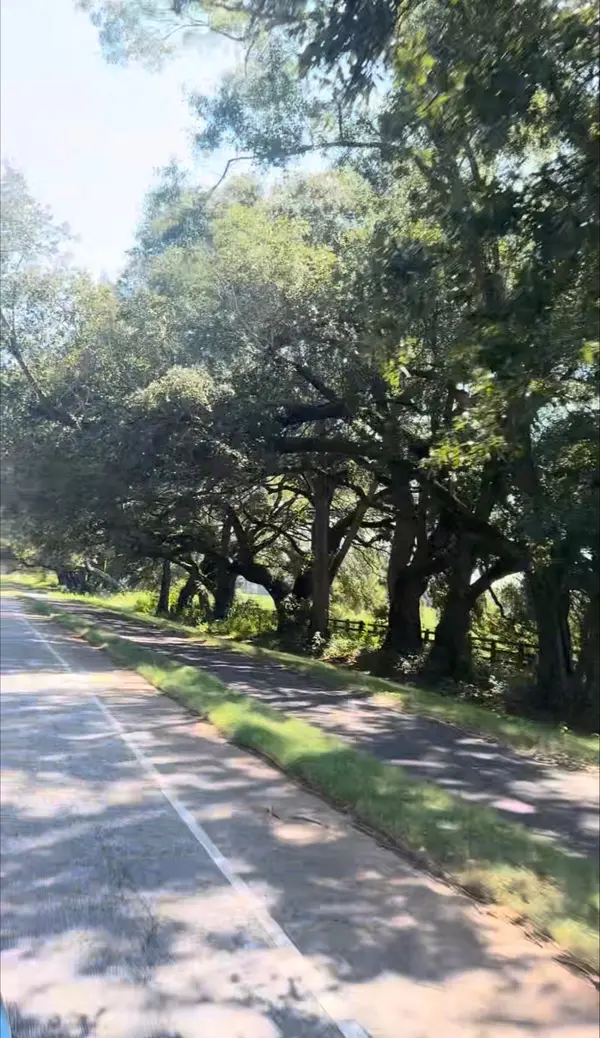
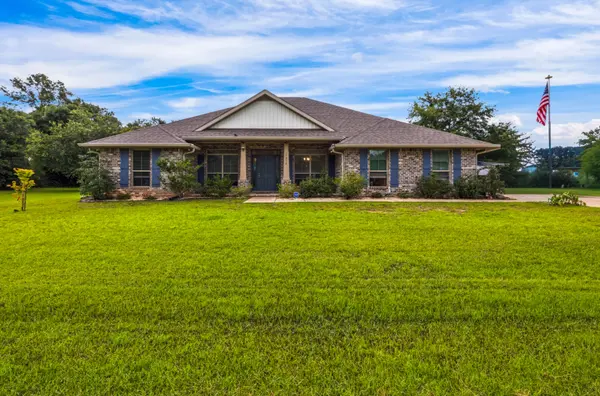
Elberta is a different kind of place. Smaller. More rural. Bigger lots. Fewer stoplights. When buyers reach the point in their search where they realize they want Foley's access without Foley's density, they end up looking east. That's where I live.
Elberta's Quiet Renaissance
What's interesting is that Elberta is not asleep. The town is growing thoughtfully on its own terms.
State Street Coffee & Ice Cream opened in November 2025. The owners converted a construction office because their team had extra space and the town wanted somewhere to gather. They asked the community what to put there. The community said coffee. Now the shop serves handcrafted espresso, 24 flavors of ice cream, customizable parfaits, and is prepping a back room for community events.
Just down State Street, Oakley's Wine Bar & Bistro opened in 2025 — fresh Gulf seafood, premium wines, live music, a patio. Fine dining residents don't have to drive to Fairhope for.
Elberta's Planning Commission meets monthly. Town leadership is intentional about how the growth is happening. The town's character — bigger lots, slower pace, a community that knows each other — is something current residents protect actively.
If you'd asked me five years ago whether national press would write about Elberta, I would have laughed. Reading my own town in a NOLA story this month was the first sign that what I see on the ground every day is now visible to the rest of the country.
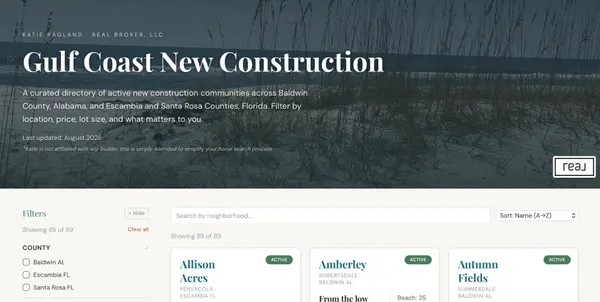
I built two community guide websites that cover both towns in detail — Elberta.RealEstate and Foley.RealEstate. Restaurants, locally-owned businesses, new construction neighborhoods, dog-friendly trails, and the kind of intel that's hard to find unless you actually live here. Both are live. They're not just for buyers; they're for anyone who wants a better view of these towns.
The Infrastructure Is Following Both Towns
Growth at this pace requires infrastructure investment, and Baldwin County is building it.
A 111-acre sports tourism complex — the proposed Herbert J. Malone Sportsplex — just filed its Planned Unit Development application near the Foley Beach Express. Eleven playing fields, a main plaza, and 1,190 parking spaces. The aim is year-round visitation, not just summer.
ALDOT's new Intracoastal Waterway Bridge in southern Baldwin County is opening two lanes by Memorial Day, doubling capacity over the existing Beach Express. A new connector to State Route 161 is creating an entirely new corridor between Foley and the beach. SR-180 widening is going out for bid this summer.
Starting May 21, Allegiant is launching five new direct flights into Gulf Shores International Airport — from Huntsville, Louisville, Omaha, Springfield, and Oklahoma City. The Gulf Shores airport's recent passenger surveys showed that nearly half of arriving passengers had never visited Alabama's beaches before commercial service began, and 80% indicated they planned to return more often now that nonstop flights were available.
Baldwin County's tourism economy hit a record $923 million in lodging spending last year, with 8.4 million visitors. Spring and fall visitation has been holding steady year over year, which means local businesses can keep staff employed year-round rather than just during peak summer. That changes the economic profile of the entire county.
What This Means If You Live Here, Want to Live Here, or Own Property Nearby
If you're a current resident: The growth is real and isn't slowing. The infrastructure investment is significant. Property values in Foley and Elberta — and across south Baldwin County — have a long-term tailwind from the inflow of new residents and the supporting development. The challenge is the change in feel. Some longtime residents are wary of the pace; others are embracing the local economy boost. Both reactions are reasonable.
If you're considering a move: The data should reassure you that the growth story isn't speculation. It's structural. The county is investing in infrastructure that will support continued growth for the next decade. New residents are arriving from across the country, including a meaningful share from outside the South.
If you own Gulf Coast property and live elsewhere: The same trends affecting Foley and Elberta affect property values across south Baldwin County. The increase in year-round demand means rental income windows are widening. The new commercial flights mean second-home owners can reach the area more easily and more often.
What I Tell Clients
When clients ask me about the difference between Foley and Elberta, I tell them this: Foley is having its moment out loud. Elberta is having its quieter one. Both are part of the same story. The same growth pulling people to Foley is pulling some of them past Foley to Elberta, where lots are bigger and the pace is slower.
Neither answer is wrong. The question is what you actually want.
If you want active community, lots of options for restaurants and shopping, easy beach access, and a town that's leaning into its growth, Foley is probably your fit. If you want more open space, fewer stoplights, and a community that knows your name, Elberta is probably worth a closer look.
Either way, this is one of the most active periods of growth Baldwin County has seen in decades. Knowing what's being built and why matters whether you're buying, selling, or just trying to understand where the area is headed.
If you want to talk through any of this — the data, the projects, what neighborhoods are most likely to benefit, how to think about Elberta versus Foley for your specific situation — I'm always happy to chat. Tracking development is part of what I do.
Katie Ragland | Real Broker, LLC256-366-6974 | linktr.ee/katieraglandrealtorElberta.RealEstate · Foley.RealEstate
Categories
Recent Posts